
New Zealand businesses shipping internationally face a crucial decision: choosing the right freight mode. Whether importing time-sensitive components from Asia or exporting to Australia, the choice between air, sea, and multimodal freight shapes your costs, timelines, and supply chain.
With over 10 years of industry experience, Magellan Logistics understands what NZ importers and exporters need when selecting the right approach.
This article explores the three main types of freight forwarding, NZ customs requirements, and how to select the right mode for your business.
What Is Freight Forwarding?
Freight forwarding service is the specialist service of coordinating international shipments on behalf of importers and exporters. Understanding how the different types of freight forwarding work helps businesses choose the right service partner for their needs.
What Freight Forwarders Actually Do
A freight forwarder manages everything between your warehouse and the destination: booking cargo space, preparing customs documentation, arranging transport to ports or airports, and tracking shipments in real time.
Unlike shipping companies that simply transport goods, freight forwarders act as logistics orchestrators. They handle compliance with NZ Customs Service requirements and ensure all documentation meets regulatory standards.
For businesses new to international trade, a forwarder bridges the gap between your operation and the complex rules of international freight forwarding and customs clearance.
What Are the Main Types of Air Freight Forwarding Services?
Air freight is the fastest option for international shipments from New Zealand, moving goods in days rather than weeks. It suits time-critical cargo: perishable goods,
high-value electronics, urgent spare parts, or seasonal products with tight windows.
When Air Freight Makes Sense
Air freight costs significantly more than sea freight, making it best for items where speed justifies the premium. From Auckland, air freight connects to Asia, Europe, and North America, with secondary hubs like Christchurch supporting South Island exporters.
Transit times typically run 1-4 days to Australia, 2–7 days to Asia, and 5–10 days to Europe or North America, though express services are faster.
Air freight forwarding requires precision in documentation and in compliance with hazardous goods regulations. Forwarders manage air waybills, ensure cargo meets IATA regulations, and coordinate with customs pre-clearance systems. Real-time tracking is standard, giving importers visibility from departure through final delivery.
Sea Freight Forwarding: Cost-Effective Bulk Shipping
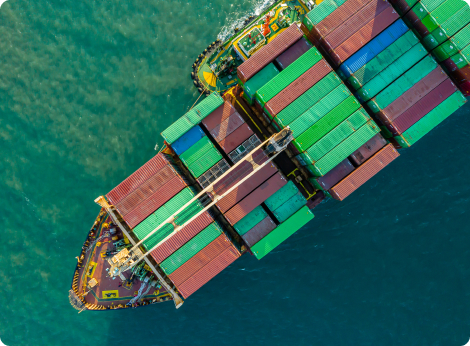
Sea freight remains the most economical choice for volume shipments, making it the backbone of international trade for most New Zealand businesses. Container loads move goods affordably across the world, whether in full container loads (FCL) or less-than-container loads (LCL) shared with other exporters.
Ports, Routes, and Planning
New Zealand’s primary ports are Auckland, Tauranga, Wellington, and Christchurch. From Auckland, regular services run to major Asian hubs (particularly the China-NZ corridor), Australia, and Europe. For smaller volumes, LCL consolidation offers cost savings without committing to a full container.
Sea freight timelines require planning: 3-26 days to Australia, 15–45 days to Asia, and 45-60 days to Europe. These transit times demand advance scheduling, but cost savings for bulk shipments are substantial.
Sea freight forwarding includes bill of lading preparation, container documentation, and customs entry filing in destination countries.
Combining Modes: The Multimodal Advantage
When the basic types of freight forwarding alone don’t fit your needs, multimodal freight forwarding combines air, sea, and sometimes road transport in a single journey. This hybrid approach balances cost and speed for businesses that need faster delivery than sea alone but cannot justify full air freight costs.
How Multimodal Routes Work
Multimodal arrangements are particularly valuable on the China-NZ route. Goods can be consolidated in a regional port and then fly to Auckland or Christchurch for final delivery, reducing costs compared to full air freight.
Coordinating multiple carriers and transport modes adds complexity, but forwarders manage this coordination. They ensure seamless handoffs between modes and compliance at each border crossing.
Real-time tracking across all modes is essential for multimodal shipments. Platforms like MagTrack provide full visibility throughout the journey, keeping businesses informed at every stage.
Key Forwarder Responsibilities in New Zealand: Customs, Compliance and Tracking
Selecting a freight forwarding mode is only the first decision. Your forwarder must navigate New Zealand’s regulatory environment with precision.
Customs and Biosecurity Compliance
NZ Customs Service compliance is non-negotiable. Forwarders file entry documents, manage customs clearance, and ensure duties and taxes are correctly calculated.
They also coordinate with the Ministry for Primary Industries (MPI) on biosecurity requirements, particularly for food, plant, and animal product imports. MPI border checks can delay shipments if documentation is incomplete, so experienced forwarders anticipate these requirements upfront.
Licensing and Tracking Systems
Customs clearance in New Zealand is handled seamlessly through our accredited local brokerage partner, so our clients enjoy a fully managed, end-to-end freight experience without any additional coordination on their part. Real-time tracking systems like MagTrack provide shipment visibility and compliance status updates.
Key documentation includes bills of lading, commercial invoices, packing lists, and certificates of origin, each prepared to meet NZ standards.
How Do You Choose the Right Freight Mode for Your Business?
Successfully selecting from the types of freight forwarding requires understanding three key factors. Your choice will affect cost, lead times, and supply chain reliability.
Urgency, Cost, and Destination
First, consider urgency. If your shipment must arrive within days, air freight is essential. For timelines measured in weeks, sea freight is cost-effective. If you need delivery in 10–14 days but cannot justify air freight costs, multimodal provides a middle ground.
Second, weigh cost against speed. Sea freight saves 70-80% on per-unit costs compared to air, making it ideal for planned shipments. Air freight’s premium suits time-sensitive revenues where speed drives value.
Third, assess your destination. Regular shipments to Australia favour sea or road combinations. High-volume China-NZ trade uses consolidated sea services. European or North American imports often combine different freight forwarding modes to balance cost and delivery.
Partner with Magellan Logistics
Navigating the many types of freight forwarding requires expertise in customs compliance, cost optimisation, and regulatory precision.
Why Businesses Choose Magellan
Magellan Logistics brings over 10 years of experience across all types of freight forwarding: multimodal freight, air freight forwarding, and sea freight forwarding for New Zealand businesses. Our real-time tracking through MagTrack ensures smooth movement through every border.
Let Magellan Logistics manage your freight forwarding so you can focus on growing your business. Our Auckland team, backed by 50+ employees across five offices in New Zealand and Australia, provides the hands-on guidance your business needs.
Speak to an expert to discuss which freight forwarding option best suits your supply chain.