
Sea freight remains the backbone of New Zealand’s international trade, yet the costs can feel unpredictable. Rates shift monthly, surcharges appear without warning, and many importers and exporters are left wondering why their last shipment cost so much more than the one before. For over 10 years, Magellan Logistics has been helping New Zealand businesses make sense of these fluctuations and plan their freight spend with confidence.
This article breaks down the key sea freight cost factors driving ocean shipping costs in 2026, from fuel surcharges to seasonal peaks, so you can budget accurately and work smarter with your freight forwarder.
What Are Sea Freight Rates?
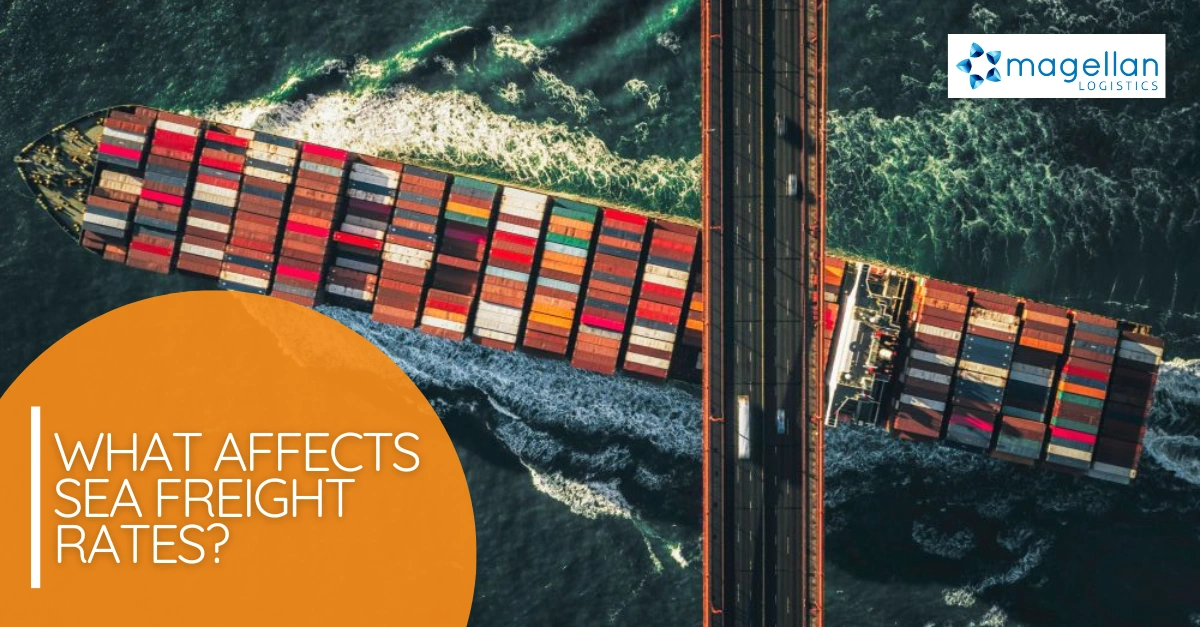
Sea freight rates are the charges applied to move cargo between ports by ocean vessel. For New Zealand importers and exporters, ocean freight rates cover a range of components that go well beyond a single headline figure.
Base Rates, Surcharges, and Total Cost
The base rate is what a shipping line charges to move a container from origin to destination. On top of that, there are surcharges: fuel adjustments, terminal handling fees, peak season premiums, and currency adjustments. Together, these make up the true cost of your sea freight services.
Carriers offer two main container options: Full Container Load (FCL) and Less-Than-Container Load (LCL). FCL means you book the entire container; LCL means your cargo shares space with other shipments. Your choice between the two significantly affects container shipping costs.
The Five Major Factors That Move Sea Freight Rates
Understanding what affects ocean shipping costs starts with the forces that push rates up or down on every trade lane. These are the key variables that Magellan monitors closely to advise clients before bookings are made.
Fuel Costs and Bunker Surcharges
The Bunker Adjustment Factor (BAF) is a surcharge carriers apply to recover fuel cost volatility. When crude oil prices rise, BAF rises with them, sometimes representing 10-30% of total freight costs on a given route. In 2026, BAF remains variable and must be factored into your total cost estimate.
Supply and Demand
When demand for container space outpaces vessel availability, sea freight rates climb. For NZ importers, peak season runs from July through December as retailers build stock for the Christmas and summer period. Exporters shipping to the Northern Hemisphere face their own peak from August to September. In both windows, rates can rise sharply as carriers fill vessels quickly; in slower periods, they ease as shipping lines compete for cargo.
Blank sailings, where carriers cancel departures to reduce supply and maintain rates, can also push remaining shipments onto fewer vessels at premium rates.
Distance and Trade Routes
China-NZ routes differ significantly from Australia-NZ or India-NZ routes in both rate and transit time. Longer voyages mean more fuel, more port calls, and more risk exposure. Specialist trades such as UK-NZ and India-NZ often carry variable carrier availability, which can affect ocean freight rates without notice.
How Port Fees, Container Choice, and Timing Affect What You Pay
Terminal Handling Charges (THC) apply at both origin and destination ports. For New Zealand shipments, this includes handling at Auckland, Wellington, and Christchurch. These charges are separate from the base freight rate and can vary between shipping lines and terminals.
Currency Fluctuation and Container Selection
Currency fluctuation is a sea freight cost factor many NZ importers overlook. Freight for New Zealand shipments is typically quoted in USD, so when the NZD weakens, your effective costs rise even if the USD rate holds steady.
For container choice, a useful guide: LCL is typically more cost-effective for shipments under about 15 CBM. Above that threshold, FCL is usually the more economical option. Your supply chain management approach can also influence which option suits your freight profile.
Contract vs Spot Rates: How Freight Forwarders Protect Your Budget
Spot rates are transactional: you book at today’s market price, which can vary week to week. Contract rates are negotiated in advance, typically quarterly or annually, and offer greater stability in exchange for volume commitments.
How Can NZ Businesses Reduce Ocean Freight Costs?
There are practical steps any New Zealand business can take to manage sea freight rates more effectively.
Practical Steps to Manage Sea Freight Pricing
Consolidating shipments into full containers rather than multiple smaller LCL consignments reduces per-unit costs over time. Shipping outside peak season, when inventory allows, can lower costs considerably. Locking in contract rates on predictable lanes such as China-NZ removes the risk of paying peak spot rates.
Working with a freight forwarder who benchmarks rates and advocates across multiple carriers is one of the most reliable ways to manage container shipping costs. Understanding customs brokerage requirements early also avoids delays that inflate landed costs.
Your Sea Freight Rate Questions Answered
These are the questions New Zealand shippers ask most often about ocean freight pricing in 2026.
What are typical sea freight rates from China to New Zealand in 2026?
Rates from China reflect current market conditions for base ocean freight. Total landed costs increase once THC, BAF, and applicable surcharges are added.
Why do sea freight rates change so frequently?
Oil prices, port congestion, carrier capacity, seasonal demand and even geopolitical events can shift on short cycles. There is no fixed rate; it depends on your shipment date, origin port, and destination.
What is the difference between LCL and FCL?
LCL suits smaller consignments where cargo shares container space. FCL suits larger volumes where you occupy the full container, with a typical break-even around 15 CBM.
What is a bunker surcharge?
BAF (Bunker Adjustment Factor) is the mechanism carriers use to pass on fuel cost changes, applied on top of the base freight rate.
Navigating sea freight rates takes more than tracking the market. It takes carrier relationships, NZ route knowledge, and the ability to time contracts well. Magellan Logistics has supported New Zealand businesses for over 10 years, with access to 270+ global locations through our partner network.
Let the experts at Magellan Logistics manage your ocean freight so you can focus on what truly matters. Our Auckland team is ready to help you find the right balance of cost, timing, and visibility.