
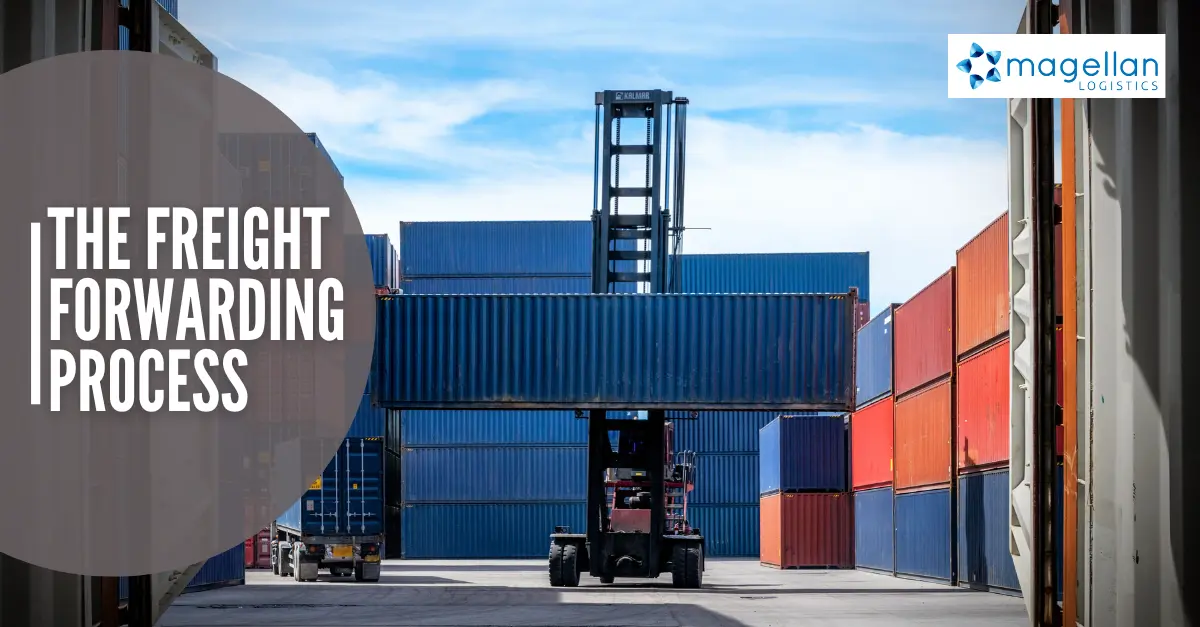
New Zealand importers and exporters face complex logistics involving customs, biosecurity, and multiple carriers. With over 10 years of industry experience, Magellan Logistics guides NZ businesses through every stage of the freight forwarding process, from warehouse pickup to final delivery. This reduces delays, controls costs, and ensures compliance with NZ Customs Service and MPI regulations.
This guide breaks down how freight forwarding works into 8 steps, explaining what happens at each stage. Understanding the complete freight forwarding process, explained in simple steps, ensures your business stays compliant and competitive.
Step 1: Export Haulage and Pick-Up
Your freight forwarding journey begins at your supplier or manufacturer. A carrier collects your goods and confirms product details, quantities, and packaging integrity. This step is critical to New Zealand’s island trading model: early detection of packaging issues or undeclared items prevents costly border delays.
What to Prepare Before Pick-Up
Have all goods ready and accessible. Provide accurate product descriptions, weights, dimensions, HS codes and all documentation to your freight forwarder. Clear communication at this stage prevents rework later in the freight-forwarding process and ensures smooth processing.
Step 2: Documentation Preparation and Compliance Check
Before your goods are collected by the carrier, your freight forwarder prepares and reviews all documentation, including invoices, packing lists, and certificates of origin, as part of the export clearance process.
Goods travel directly from the supplier to the shipping terminal or airport. Physical inspections are carried out at the border by customs and biosecurity authorities; for some commodities, they are mandatory; for others, they are random; and requirements vary by the country of origin.
For goods imported into New Zealand, MPI biosecurity compliance is confirmed at this stage, ensuring all products meet New Zealand’s strict import standards.
NZ-Specific Biosecurity Considerations
New Zealand’s Biosecurity Act is strict. Your freight forwarder must verify that agricultural or food products have the required MPI export health certificates before proceeding. Skipping this step risks border rejection and significant delays.
Step 3: Cargo Collection and Origin Handling
Your freight forwarder’s origin partner facilitates the inspection and authentication of cargo contents by the relevant regulatory body in the origin country (customs department). This ensures compliance with export controls, trade regulations, and security standards before goods are loaded onto a ship or aircraft for transit to New Zealand.
Step 4: International Transportation (Air or Sea)
Your goods have now been handed over to the international carrier. This is air or sea, depending on your requirements, urgency, and budget. From Auckland port or airport, your shipment travels to the destination country.
Transit time varies by mode: sea freight suits cost-conscious shipments, while air freight suits time-sensitive products.
A reputable freight forwarder like Magellan maintains strong relationships with major carriers, securing competitive rates and reliable schedules. Your shipper can track progress through this phase, reducing anxiety about goods in transit.
Choosing Air vs. Sea for NZ Routes
Sea freight is economical for large volumes and less time-sensitive cargo; air is ideal for perishables, high-value items, or urgent shipments. Magellan’s expertise helps you balance cost and risk across NZ’s major trade routes to Australia, Asia, and beyond.
Step 5: Customs Clearance and Handling
Upon arrival in New Zealand, your goods are unloaded, de-consolidated (if part of a larger shipment), and moved to a customs holding facility. The freight forwarder coordinates handling from this point, with ownership and responsibility at each stage governed by the Incoterms under which your shipment travels.
Documentation has been lodged, and goods await customs clearance for import. This is a critical checkpoint where delays often occur if paperwork is incomplete.
Coordinating with Destination Partners
Your freight forwarder’s local network is critical here. They ensure that your goods are properly handled, safely stored, and prepared for the next stage of the freight forwarding workflow without unnecessary delays.
New Zealand Customs and Quarantine Clearance
Before your goods arrive in New Zealand, your freight forwarder or customs broker prepares and lodges all required documentation with New Zealand Customs Service and the Ministry for Primary Industries (MPI). This includes the Import Declaration, commercial invoice, packing list, and any required permits or certificates
Upon arrival, New Zealand Customs and MPI authorities screen all shipments electronically. Some shipments may be flagged for further document review or physical inspection; this is mandatory for certain commodities and random for others, depending on the country of origin and product type.
Pre-lodging documentation before arrival ensures faster clearance when your goods land, minimising delays and storage costs at the port or airport.
Step 7: Final Delivery
After clearing import customs, your goods are released. The freight forwarder arranges final delivery to your customer’s warehouse or distribution centre using a local carrier. This step includes coordinating delivery windows, confirming address details, and arranging special handling (refrigerated transport, hazmat protocols, etc.).
Managing the Final Leg
For NZ importers receiving goods, this is often the first real visibility into the condition and timing. Magellan’s network extends beyond ports, ensuring your goods reach their destination ready for business. The freight-forwarding steps culminate in a seamless handoff to you or your customer.
Step 8: Delivery Confirmation and Returns Documentation
The final step is often overlooked: delivery confirmation and documentation. The consignee signs for goods; the freight forwarder collects proof of delivery. If any damage occurred during transit, it is documented immediately.
Final invoicing and reconciliation occur here.
Closing the Loop
Your freight forwarder provides all collected documentation: delivery proofs, customs receipts, and deviation reports. This completes the paper trail. This full transparency is why NZ businesses trust Magellan: complete visibility from warehouse to delivery through the entire freight forwarding process, explained.
Why Do NZ Businesses Use Professional Freight Forwarders?
Attempting to manage the freight forwarding process yourself is risky. Missed biosecurity requirements, incomplete customs documentation, or miscommunication with carriers can cost weeks of delays and thousands in penalties. Professional freight forwarders handle the complexities of NZ’s island-trading environment, border regulations, and multi-carrier coordination.
The Value of an Expert Freight Forwarding Workflow
Understanding how freight forwarding works step by step requires expertise. With 28+ years of industry experience and operations in New Zealand since 2015, Magellan understands the nuances of NZ customs, MPI requirements, and the logistics routes that matter to local businesses. A professional forwarder means fewer delays and greater confidence at every stage.
Partner with Magellan Logistics
Don’t let freight forwarding complexity slow your business. Magellan Logistics manages every step of the freight forwarding process, from warehouse pickup through import clearance and final delivery. Our Auckland team provides hands-on guidance, real-time tracking via MagTrack, and the customs expertise your NZ business needs.
Get Started with Magellan
Speak to an expert on our contact page.
Or explore our Freight Forwarding services to learn how we support NZ importers and exporters.